

Porcelain Dental Veneers
A smile is the most effective calling card a person can present to the outside world. It is not just about the alignment of teeth; it is a reflection of self-confidence, social success, and even emotional state. However, many of us may not be born with perfect teeth. Genetic factors, antibiotics used in childhood, or wear and tear that comes with age can cast a shadow over our smile. Modern dentistry offers a wonderful solution to eliminate these shadows and rebuild aesthetics while preserving tooth structure to the maximum extent: porcelain laminate dental veneers.
In this article, we will explore the secret behind the 'Hollywood Smile' and how these thin porcelain sheets can change your life in the finest detail.
What Are Porcelain Dental Laminate Veneers?
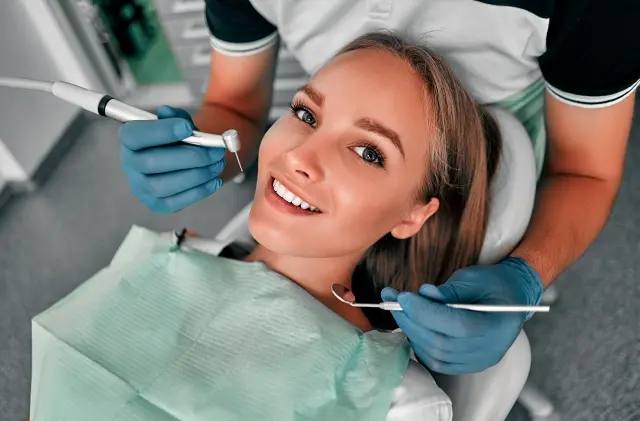
Porcelain dental veneers are extremely thin porcelain shells, the colour of teeth, which are bonded only to the front (visible) surface of the teeth. In dentistry, this procedure is often referred to as a 'conservative' approach. This is because, while traditional crown applications require the reduction of the entire tooth, veneers do not touch the healthy tissue of the tooth or only require abrasion of a thickness equivalent to a fingernail (0.3 - 0.7 mm).
Types of Porcelain Dental Veneers
When we talk about porcelain dental veneers, we are not referring to a single solution, but rather several different techniques and materials that cater to different needs and expectations. The main ones are as follows:
Traditional Porcelain Laminate Veneers (Porcelain Laminates)
These are very thin (0.3–0.7 mm) laminates, typically made from feldspathic porcelain or the more modern material lithium disilicate (E-max), which are applied only to the front surface of the tooth. Their main advantage is that they bond strongly to the tooth enamel, providing both a natural appearance and high durability. When done correctly, they are extremely compatible with the gums and healthy.
Metal-Supported Porcelain Veneers
These veneers have a metal substructure inside and are covered with porcelain on the outside. Due to their high durability, they are particularly suitable for back teeth (in bridge applications) or teeth exposed to high chewing forces.
Zirconium-Supported (Zirconium Crowns)
Developed as an alternative to metal-supported veneers, zirconium crowns have a white colour and an extremely durable base. As they do not contain metal, problems such as discolouration of the gums or the formation of black lines do not occur. Their light transmission is higher than that of metal-supported crowns, giving them a more natural appearance. They are a good option for those seeking durability and aesthetics, especially for back teeth.
Full Ceramic Veneers (E-Max)
Today, full ceramic veneers (commonly known as E-max) are made entirely of high-strength glass ceramic without a metal or zirconium base. This material, which has a structure similar to the crystal structure of natural tooth enamel, transmits and reflects light in the most natural way, offering excellent aesthetics. It can be used both as a laminate veneer and as a single-piece crown. It is often preferred for front teeth that require high aesthetics.
Prep-Free (No Preparation / Minimal Preparation) Veneers (Lumineers)
These veneers are much thinner than traditional veneers (approximately 0.2–0.3 mm) and are designed to be applied with minimal intervention to the tooth enamel (sometimes even without any intervention). Due to the significant preservation of the tooth enamel, the procedure is largely reversible and usually does not require anesthesia. However, it is not suitable for every patient. Criteria such as a slight inward tilt (retroclination) of the teeth and not overly severe discoloration are sought. If the existing teeth are already large, these veneers may cause the teeth to appear even larger and bulkier.
Why Porcelain Laminates? In Which Cases Are They Used?
Laminate veneers are highly effective in cases where teeth whitening alone is insufficient or where there are structural problems with the shape of the teeth. Here are the most common areas where this treatment is used:
- Stubborn discoloration: It is the gold standard for masking stains that do not respond to teeth whitening (bleaching) procedures, particularly those caused by tetracycline antibiotics used in childhood, fluorosis (excessive fluoride intake), or severe age-related stains.
- Gaps between teeth (diastema): For individuals with unsightly gaps between their teeth, it closes these gaps to provide a more cohesive and harmonious smile.
- Broken and worn teeth. Restores teeth that have been broken, cracked, or shortened due to trauma or acidic drinks/teeth grinding to their original form.
- Shape abnormalities (Peg laterals): Used to bring the size of teeth that are genetically smaller or pointed (wedge-shaped) than normal to ideal proportions.
- Mild misalignments Creates an 'instant orthodontic' effect in adults with slightly crooked teeth who do not wish to undergo long-term wire treatment (orthodontics), aligning the teeth into a proper arrangement.
Who is It Not Suitable For?
Although porcelain veneers produce excellent results, they may not be the right choice for every patient. Sources indicate that caution should be exercised in the following situations:
Porcelain Dental Veneer Treatment Process: Step-By-Step to a New Smile
The path to your new smile is usually completed in 3-4 appointments:
Initial Consultation and Planning
At your first appointment, your dentist will listen to your expectations and concerns. They will perform an oral examination and check the health of your gums. X-rays will be taken to assess your tooth roots and jawbone. At this stage, Digital Smile Design (DSD) can be used to show you a preview of the final result. This allows you and your dentist to decide together on the shape, size, and color of your new smile.
- Mock-up: Without touching your teeth, the design is tested in your mouth using a temporary material. This allows you to see what the result will look like in advance.
Preparation and Measurement
Once the design has been approved, the teeth are prepared.
- Abrasion: Space is created on the front surface of the tooth for the porcelain. A delicate 'finish line' (chamfer) is created at the gum line.
- Incisal Design: It is determined how the tip of the tooth will be cut. One of the following models is selected: only the front surface (window), slightly slanted (bevel), or completely covering the tip (overlap).
- Measurement: A 3D model of the teeth is created using the classic method or digital scanners.
Laboratory and Temporary Veneers
While your porcelain veneers are being prepared (approximately 1-2 weeks), you may have temporary veneers on your teeth. This process aims to prevent sensitivity and preserve aesthetics.
Fitting and Bonding (Cementation)
The veneers arriving from the laboratory are first checked using 'try-in' pastes. It is ensured that the color and fit are perfect.
- Bonding: The inner surface of the porcelain is roughened with hydrofluoric acid, while the tooth enamel is roughened with phosphoric acid.
- Curing with laser/light: The veneers are bonded to the tooth using special resin adhesives and cured with light.
How Should Porcelain Dental Veneers Be Cared For?
When properly applied and cared for, porcelain laminate veneers can last 10, 15, or even 20 years, looking as good as new. Studies show that the 10-year success rate is around 91-94%.
Tips for long-lasting veneers:
Advantages and Disadvantages of Porcelain Dental Veneers
Porcelain veneers, like any other therapy, have pros and cons. To make a smart choice, you need to know about these.
Advantages of Porcelain Dental Veneers
Disadvantages of Porcelain Dental Veneers
Material Selection: Which Porcelain is Better?
Porcelain laminate veneers are one of the most advanced and safest options available in aesthetic dentistry today. They can cover all imperfections in your smile with the thinness of a contact lens while preserving your tooth structure. The important thing is to clearly share your expectations with your dentist and proceed with the most suitable material and technique for you.
In modern technology, veneers are generally produced from two main materials:
- Feldspathic porcelain: This is the classic method. It is made by layering powder and liquid in the laboratory. Its biggest advantage is that it is the material that best mimics the light transmission (translucency) of natural tooth enamel. It can be produced very thinly (under 0.5 mm), but its physical resistance is slightly lower than other ceramics.
- Glass ceramics (lithium disilicate / E-max): This is the most popular type today. They are much more durable and are usually produced using computer-aided systems (CAD/CAM) or pressing methods. They are preferred for teeth under high stress because they are both highly aesthetic and very strong.
Comparison of Porcelain Veneers and Composite Veneers
One of the most confusing points in the decision-making process is whether to opt for porcelain or composite (filling material) veneers. Here is a comparison of these two methods:
Porcelain Veneer Prices
The price of porcelain dental veneers varies greatly depending on several factors. These factors include:
- The material used: There is a price difference between metal-supported porcelain, zirconium, and high-aesthetic materials such as E.max.
- The dentist's experience and the clinic's location: An experienced cosmetic dentist and a centrally located clinic may charge higher fees.
- Laboratory quality: The technology and certification (such as ISO and AACD) of the laboratory where the veneers are produced affect the cost.
- Number of teeth to be treated: While there is a difference in total cost between a single-tooth veneer and a 20-tooth smile design (Hollywood Smile), the cost per tooth is generally lower in cases involving multiple teeth.
- Additional procedures: Whether additional treatments such as gum contouring or root canal treatment is required.
It is important to note that these prices may include temporary veneers, digital smile design, and in some cases, accommodation. For current prices, please contact Dento Dream.